7:41 PM EINSTAR VEGA: A Versatile 3D Scanning Solution for Portable Applications |
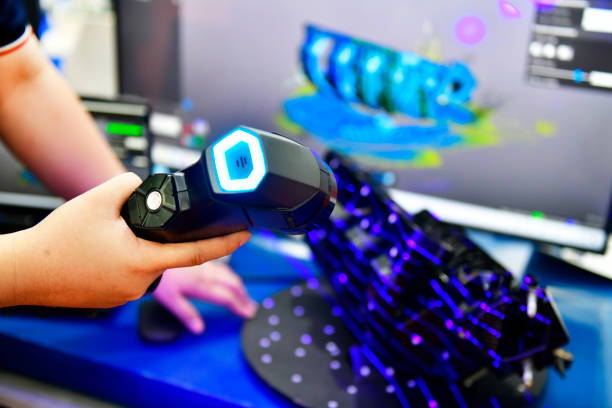
Three dimensional scanning has become an important technology for professionals, manufacturers, engineers, designers, educators, and individual creators who need to bring physical objects into digital workflows. The ability to capture real world geometry and convert it into digital information can support applications ranging from engineering and product development to 3D printing, personal manufacturing, aftermarket projects, and education. The EINSTAR VEGA is designed around the idea of flexible three dimensional scanning for applications where portability and practical operation are important. A portable scanning solution can give users greater freedom to work with objects in different environments rather than relying exclusively on a fixed scanning workstation. This flexibility can make portable 3D scanning useful for a wide variety of projects involving physical components, prototypes, products, and other objects. Understanding Portable 3D ScanningPortable 3D scanning provides an alternative to stationary scanning workflows. Instead of bringing every object to a dedicated scanning area, users can take the scanning equipment to the object. This approach can be particularly useful when objects are large, difficult to transport, or located within workshops, manufacturing environments, laboratories, educational facilities, or other working areas. The objective remains the same as other 3D scanning workflows. Physical geometry is captured and transformed into digital information that can subsequently be processed and incorporated into a broader digital workflow. A Flexible Approach to Object DigitizationThe ability to digitize physical objects can be valuable across many industries. A designer may need to capture an existing product before developing a modified version. An engineer may need a digital reference for an existing component. A manufacturer may want to incorporate physical geometry into a digital development process. A portable scanning approach can make these activities more flexible by allowing users to work directly around the object. Supporting Engineering ApplicationsEngineering is an important area where portable 3D scanning can provide practical benefits. Engineers frequently work with physical components, prototypes, machinery, and existing products. Some of these objects may not have readily available digital design files. Scanning can provide digital information based on the physical object itself. The resulting information can become a reference for engineering development, customization, documentation, or prototyping. The portability of a scanning solution can be particularly useful when the component is already installed or located in an environment where moving it would be inconvenient. Supporting Product DevelopmentProduct development often involves both physical and digital stages. Designers may begin with a concept, create a physical prototype, evaluate it, and then return to the digital environment to make further improvements. Portable 3D scanning can support this process by allowing physical prototypes to be captured and converted into digital references. The resulting information can then contribute to further design development and refinement. Supporting 3D PrintingThree dimensional scanning and 3D printing can work together as part of a digital manufacturing workflow. An existing physical object can be scanned and converted into digital information. After appropriate processing, the digital representation can be used as a reference for creating a new design or preparing an object for a suitable 3D printing workflow. This can be useful for prototyping, customization, personal manufacturing, and creative projects. Personal Manufacturing ApplicationsPersonal manufacturing has made digital fabrication more accessible to individual creators. Portable scanning can expand these possibilities by allowing users to capture real world objects and use them as references for new digital designs. A creator can start with an existing physical object, create digital information through scanning, and then develop a modified design for a manufacturing application. EINSTAR VEGA provides a versatile approach to 3D scanning for projects that require flexibility across different working environments. This approach can reduce the need to create every digital concept entirely from the beginning. Supporting Aftermarket DevelopmentAftermarket applications often involve existing products and components. Replacement parts, customized components, and modifications may need to correspond closely with an existing physical object. Portable 3D scanning can provide digital reference information by capturing the geometry of the component. This information can then be incorporated into a design and development workflow. The approach can be particularly useful when original digital files are unavailable. Automotive ApplicationsAutomotive projects can involve components with curves, contours, and irregular surfaces. A portable scanning system can provide flexibility when capturing these components because the operator can work around the physical part. The resulting digital information can support automotive engineering, customization, aftermarket development, prototyping, and related design activities. Working With Larger ObjectsPortability can become particularly useful when scanning objects that are difficult to place on a desktop scanning system. Rather than moving a large object to a dedicated workstation, users can potentially work around the object within its existing environment. This can provide additional flexibility for workshops, manufacturing facilities, engineering environments, and other professional settings. The appropriate scanning approach will depend on the object's size and the requirements of the selected equipment. Working in Different EnvironmentsPortable scanning can provide opportunities to work in environments that are not specifically designed as scanning laboratories. A scanner can potentially be used in a workshop, classroom, laboratory, production environment, design studio, or other suitable location. This flexibility allows organizations to incorporate scanning into existing workflows instead of creating a completely separate process. Capturing Complex GeometryPhysical objects can contain complicated curves, recessed areas, irregular surfaces, and other features that may be difficult to reproduce through manual measurements alone. Three dimensional scanning provides a way to capture physical geometry digitally. Portable operation can make it easier to approach different surfaces and adjust the scanning position according to the shape of the object. This can be useful for engineering components, prototypes, automotive parts, and other objects with complex forms. Supporting PrototypingPrototyping frequently involves repeated transitions between digital designs and physical objects. A physical prototype can be scanned and converted into digital information. Designers can then use the resulting model as a reference for modifications. A revised design can subsequently be manufactured as another prototype. This creates an iterative workflow involving scanning, modeling, manufacturing, evaluation, and further development. Supporting Digital DocumentationDigital documentation can provide useful information about physical components and products. A scanned representation can serve as a digital reference for future design, engineering, manufacturing, or educational activities. Portable scanning can be especially convenient when the object cannot easily be transported to a dedicated scanning workstation. Supporting EducationThree dimensional scanning can also provide valuable opportunities in education. Students can learn how physical objects are transformed into digital information and how that information can be used within digital manufacturing workflows. A portable scanning solution can make practical learning possible in different classroom or laboratory environments. Students can explore relationships between physical geometry, digital models, engineering, design, and 3D printing. Supporting Hands On LearningHands on activities can help learners understand digital technologies more effectively. A scanning project can involve identifying an object, capturing its geometry, processing the digital information, and exploring potential applications for the resulting model. This can introduce students to concepts associated with digital fabrication and modern manufacturing. Connecting Physical and Digital WorkflowsOne of the main benefits of 3D scanning is the connection between physical objects and digital environments. A physical component begins the process. Scanning converts its geometry into digital information. Digital tools can then be used to process, modify, or develop the information. The final result can potentially return to the physical world through 3D printing or another manufacturing process. This creates a continuous relationship between physical objects and digital design. Advantages of a Portable Scanning ApproachPortability can provide several practical benefits. Users can work closer to the object being scanned. Large or difficult to transport objects can potentially remain in their existing locations. Different working environments can be accommodated, and scanning can become easier to integrate into existing professional workflows. Portable operation can also support projects where the object needs to be viewed from different angles or where the scanner must move around the physical component. Building an Effective Scanning WorkflowAn effective portable scanning project begins with a clear objective. Users should determine what object needs to be captured and how the resulting digital information will be used. The scanning environment can then be prepared, and the object can be positioned appropriately. The operator can capture the required surfaces and review the resulting information. Additional scanning can be performed if important areas require further coverage. After capture, the data can be processed and prepared for the intended application. Choosing the Appropriate Scanning MethodDifferent objects can require different scanning approaches. Users should consider object size, geometry, required detail, working environment, and intended digital output. For projects involving objects that can be conveniently placed on a workstation, desktop scanning may be appropriate. For larger or less accessible objects, portable scanning can offer additional flexibility. Selecting the appropriate method can help create a more efficient workflow. Integrating Scanning With Digital ModelingScanning provides physical geometry, while digital modeling allows users to work with that geometry. A scanned object can serve as a reference for creating a new model or modifying an existing design. This combination can support product development, engineering, customization, aftermarket work, and personal manufacturing. The scanning stage therefore becomes part of a larger digital design process rather than an isolated activity. Integrating Scanning With ManufacturingAfter digital information has been processed and prepared, it can become part of a manufacturing workflow. For 3D printing, the model can be prepared according to the requirements of the selected printing process. For engineering and manufacturing applications, the digital information can serve as a reference for further development. This demonstrates how portable scanning can contribute to a complete physical to digital to physical workflow. Supporting Modern ManufacturingModern manufacturing increasingly depends on digital information. Products, components, prototypes, and physical references can all provide valuable information that can be incorporated into digital processes. Portable 3D scanning can help capture this information directly from the physical environment. By connecting physical objects with digital workflows, scanning can contribute to more flexible approaches to design, engineering, prototyping, and manufacturing. Considerations Before Starting a Scanning ProjectUsers should define their objectives before beginning a scanning project. The size and geometry of the object should be considered, along with the location where scanning will take place. It is also important to understand how the captured information will be processed and what the final digital output needs to accomplish. Careful planning can help ensure that the scanning process supports the broader project rather than becoming a separate technical activity. ConclusionThe EINSTAR VEGA represents a versatile approach to portable 3D scanning for users who need flexibility when capturing physical objects. Portable scanning can help professionals work directly in workshops, laboratories, manufacturing environments, educational settings, and other suitable locations. The technology can support engineering, product development, 3D printing, personal manufacturing, aftermarket applications, automotive projects, prototyping, documentation, and education. The broader value of portable 3D scanning comes from its ability to connect real world objects with digital workflows. Physical components can be captured, digital information can be processed and refined, and the resulting models can become part of design, engineering, manufacturing, or educational projects. As industries continue adopting digital approaches to product development and manufacturing, flexible scanning solutions can provide practical ways to bring physical objects into modern digital environments. The EINSTAR VEGA can therefore serve as part of a broader workflow that connects physical capture, digital design, and manufacturing applications.
|
|
|
| Total comments: 0 | |